An easy, inexpensive test for tuberculosis that was first developed at the UW has been endorsed by the World Health Organization, which called it a “major step forward in making TB testing faster and more accessible.”
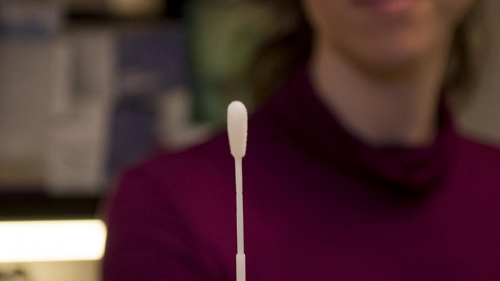
The test, which requires a simple swab of the tongue, was first demonstrated by Dr. Jerry Cangelosi, professor emeritus in the UW Department of Environmental & Occupational Health Sciences (DEOHS), and collaborators.
The WHO’s endorsement of this method could speed and ease screening for active cases of TB — the world’s deadliest infectious disease — allowing it to be treated before it spreads further.
With recent defunding of the U.S. Agency for International Development (USAID), “it's anticipated that new cases of diseases like TB are going to go through the roof, and over time there will be millions of new cases that would not otherwise have happened,” Cangelosi said. “A technological fix like this is not the total solution to that, but it could really help.”
A life-saving advance
Cangelosi and DEOHS research scientists Rachel Wood and Alaina Olson came up with what many called the “crazy idea” of tongue swabs about 14 years ago. Their goal was to identify a simpler alternative to the traditional gold standard of diagnosis for TB. That method requires patients to cough up sputum — a mucus-like substance — from their lungs.
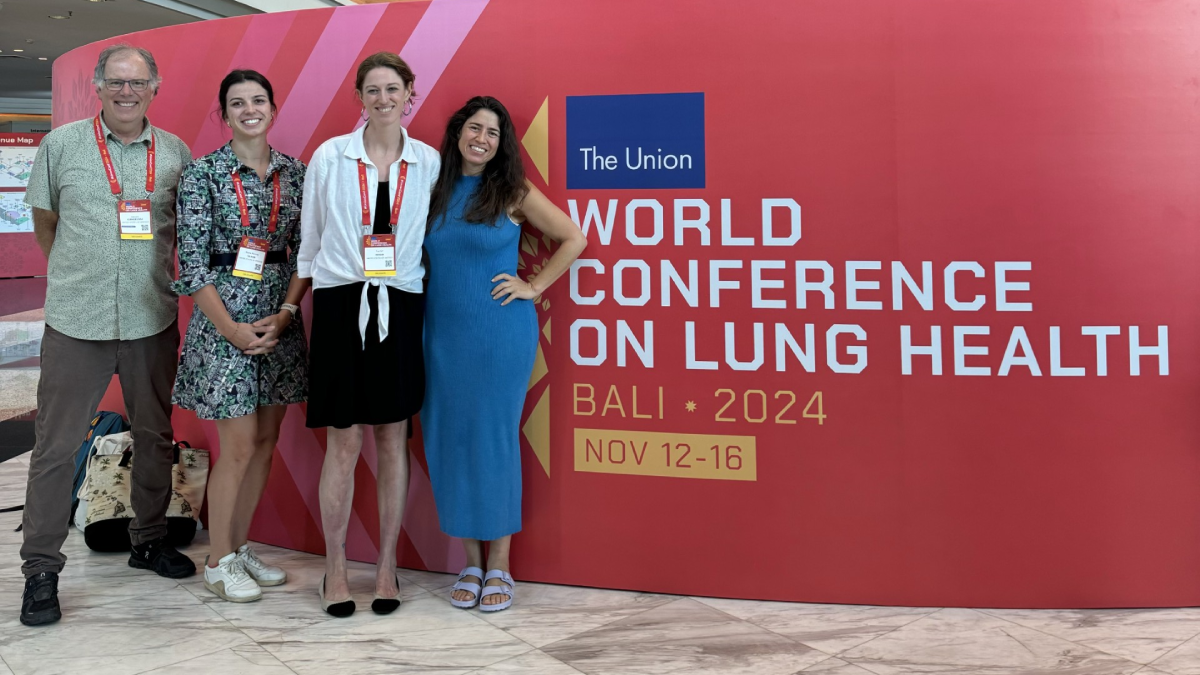
Since then, Cangelosi’s lab has shown that tongue swabs have up to 75% to 95% sensitivity at detecting cases in people showing symptoms of TB, compared to sputum analysis.
“We contributed one component of this with our very novel sampling approach, but a lot of other people contributed to this advance” by creating inexpensive testing platforms to run the tests at the point of care, Cangelosi said.
Using these new testing platforms, the tests could cost as little as $3 each, and they could be immediately analyzed in clinics with an instrument that costs a few hundred dollars.
“It's going to greatly democratize TB testing and screening in somewhat the same way that at-home tests democratized COVID screening,” Cangelosi said. “When you expand the screening like that, you detect a lot more cases, and thereby you prevent a lot more transmission.”
For example, a recent study led by DEOHS PhD student Renée Codsi, a student in Cangelosi’s lab, evaluated the method for TB screening of migrants entering Northern Italy. “Most participants preferred [tongue swabs] over sputum production and found it relatively easy,” the authors wrote.