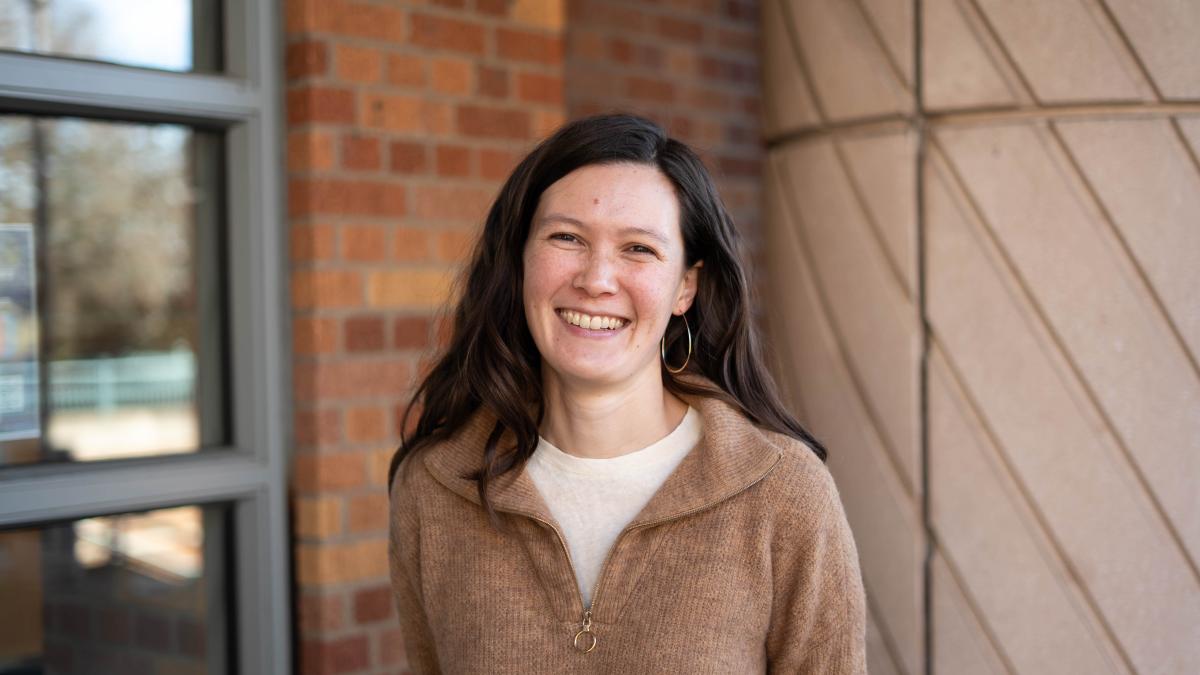
Marissa Childs almost became a mathematician rather than a scientist. But her fascination with numbers still influences the way she approaches studying the impact of climate change on health.
Childs, a new assistant professor in the UW Department of Environmental & Occupational Health Sciences (DEOHS), creates models using large data sets, statistical approaches and machine learning to quantify how our warming world will influence people’s vulnerability to mosquito-borne diseases, wildfire smoke and other environmental hazards.
“We’re at a really cool time for this approach, because we’re starting to have more data about environmental exposures and health, and we’re also starting to have the statistical tools and computing power to do something about it,” she said.
Last year, she and colleagues predicted that global warming could increase the incidence of dengue fever as much as 76% by 2050 in a large area of Asia and the Americas where transmission already routinely occurs.
DEOHS Assistant Professor Marissa Childs created this animation of daily estimates of fine particulate matter (PM2.5) from wildfire smoke across the U.S. from June to October 2020. Source: Marissa Childs.
She and collaborators have also provided some of the first contiguous-U.S.-wide, high-resolution estimates of people’s exposure to wildfire smoke by integrating satellite- and ground-based data. And she and collaborators are working with the Madagascar Ministry of Health on a project to holistically examine how the health of people in the country will be affected by climate change.
Visualizing wildfire smoke
Watch an animation of Childs’s daily estimates of wildfire smoke across the U.S. spanning the year 2020, and you see some patterns you might expect and others that are probably more surprising.
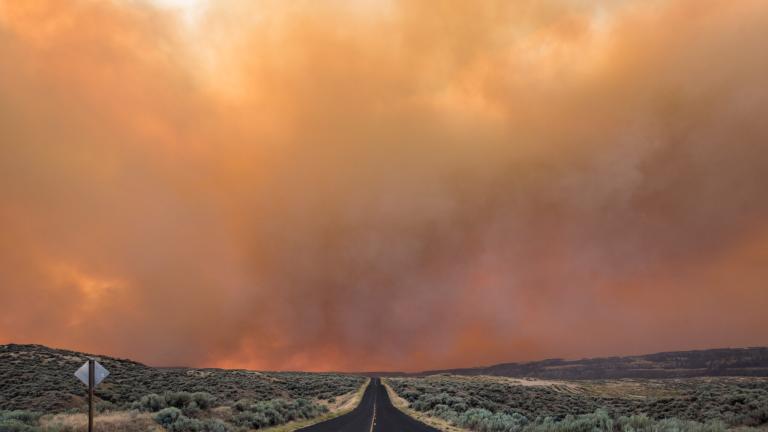
In late summer and fall, the west and southwest U.S. turns deep red as wildfires ignite, sending plumes of smoke across the country — a phenomenon now familiar to many west coasters. More surprisingly, in spring and early summer, the midwest and southern U.S. show evidence of widespread wildfire smoke events.
Looking at these estimates over many years, “you can clearly see the large increase in wildfire smoke over time,” Childs said. “It’s starting to reshape the way air pollution is occurring throughout the U.S.,” offsetting some of the progress made by the Clean Air Act.
Based on her findings, she is concerned that when it comes to wildfire smoke, “we are probably underestimating the health effects right now.”
“When it’s really bad out, people know. The sunset is red, it’s smoky outside, you can smell it. You try to exercise and you don’t feel good,” she said. “Whereas at lower concentrations, people don’t really know, but it’s out there, and it does have an impact.”
“People are being exposed so much, and we don’t really know what that’s going to mean for them in 10 to 20 years,” she added. “We’re really at the tip of the iceberg in terms of health impacts.”
An interdisciplinary home
Childs was eager to return to the west coast to join the UW: she grew up in California and her alma mater is Whitman College, in Walla Walla. But she was even more strongly drawn to the interdisciplinary nature of research in DEOHS.
“I was excited to join a department that supports research spanning both wildfire smoke and infectious disease,” she said. “It's great to work alongside colleagues across that whole spectrum, and it opens up exciting opportunities for collaboration.”
Childs is looking forward to working with students — this quarter, she is teaching the course Science and Public Health — and to building on her previous work by improving its sensitivity and examining how other climate-related factors might influence health.
“When it comes to mosquito-borne diseases, we could also think about temperature variation, precipitation and extreme weather events like tropical cyclones, and how these are going to change under climate change,” she said.
She also hopes to pursue research on adaptation to climate change by examining the effectiveness of solutions.
“There are cases where just documenting a harm doesn’t do enough,” she said. “In the short term we need to adapt, and in the long term we need to stop emitting so we can reduce the amount of warming.”