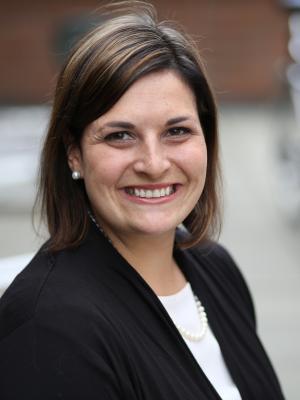
Nicole Errett, PhD, MSPH
About
Dr. Nicole Errett’s research focuses on the development, implementation and health impacts of policies and programs that aim to build resilience in the context of public health emergencies, disasters and climate change. She works closely with public health practitioners, emergency managers, community-based organizations and others to design and implement policy-relevant research that contributes to real-world solutions for pressing disaster, climate and health problems. Her research leverages qualitative and survey methods, and she frequently collaborates on interdisciplinary teams.
Dr. Errett serves as the inaugural Director of the interdisciplinary UW Center for Disaster Resilient Communities. She co-founded and co-directs the Collaborative on Extreme Event Resilience (CEER), co-directs the Community Engagement Core for the UW EDGE Center and serves on the leadership team for the Center for Health and the Global Environment, the Natural Hazards and Disaster Reconnaissance Facility (RAPID) and the Cascadia Coastlines and Peoples Research Hub. Nationally, she co-chairs the NIEHS Disaster Research Response Network Steering Committee and co-leads the Public Health Extreme Events Research Network, supported by the National Science Foundation through supplemental funding from the Centers for Disease Control and Prevention.
Dr. Errett previously served as the Special Assistant to the Assistant Secretary of Preparedness and Response at the US Department of Health and Human Services, the Policy and Legislative Director at the Baltimore City Mayor’s Office of Emergency Management and the Evaluation and Assessment Manager at the Northwest Healthcare Response Network. She holds a PhD in Health and Public Policy, an MSPH in Health Policy and a BA in Public Health Studies from the Johns Hopkins University in Baltimore, MD. She completed post-doctoral training in coastal community resilience at the University of British Columbia’s School of Community and Regional Planning in Vancouver, BC.
Education
- Post-Doctoral Research Fellowship, University of British Columbia
- PhD, Johns Hopkins University
- MSPH, Johns Hopkins University
- BA, Johns Hopkins University
Affiliations
Director, Center for Disaster Resilient CommunitiesCo-lead, Public Health Extreme Event Research (PHEER Network)
Adjunct Assistant Professor, Health Systems and Population Health
Co-Director, Collaborative on Extreme Event Resilience
Director of Research and Implementation, UW Center for Health and the Global Environment
Co-Director, Community Engagement Core, UW Center for Exposures, Diseases, Genomics and Environment
Social Sciences Lead, Natural Hazard and Disaster Reconnaissance (RAPID) Facility
Leadership Team, Cascadia Coastlines and Peoples Hazards Research Hub
Mentorship
Not available to mentor new students in autumn 2027. Please follow the instructions on the How To Apply page.
DEOHS Students Mentored
A Media Analysis of Mutual Aid in Extreme Weather Events
Sarah Fellbaum | MS Thesis | 2026 | View
A Mixed Methods Study on Local Partnerships for Public Health Emergency Preparedness
Ashley Moore | PhD | 2026 | View
Climate and Health Programs at Local Health Departments: Capacities, Barriers, and Facilitators
Anna Erickson | MPH | 2026 | View
Are Public Housing Authorities Preparing for Disasters? A Mixed Methods Study on Public Housing Authority Disaster Risk Management Strategies
Amber Shamim Khan | PhD | 2024 | View
Evaluation of a Community-Engaged Approach to Assess Climate and Disaster Risk Perception and Priorities
Samantha Lovell | MPH | 2023 | View
Research
Interests: Health impacts of disaster. Community resilience. Climate change adaptation. Public health emergency preparedness. Public health policy. Health care emergency preparedness. Public health practice.
Publications
Selected publications
- Adapting by their bootstraps: State and Territorial Public Health Agencies struggle to meet the mounting challenge of climate change
- Working with disaster-affected communities to envision healthier futures: A trauma-informed approach to post-disaster recovery planning
- What can we do when the smoke rolls in? An exploratory qualitative analysis of the impacts of rural wildfire smoke on mental health and wellbeing, and opportunities for adaptation
- Public Health Requirements and Authorities in State Statutory Disaster Recovery Law: A Cross-Sectional Legal Assessment
- Extreme Weather and Climate Change: Population Health and Health System Implications
Engagement
Equity, diversity and inclusion
Disasters and climate change exacerbate pre-existing vulnerabilities and inequities, resulting in disproportionate harm to marginalized communities. I believe disaster research requires centering the voices of those most affected, and should be led by researchers with aligned identities, lived experiences and/or trusted relationships with affected communities. Accordingly, I am committed to supporting and diversifying the next generation of disaster researchers and practitioners and developing and nurturing trusted and reciprocal relationships with community and government partners. The Collaborative on Extreme Event Resilience’s commitment to diversity, equity, inclusion and antiracism can be found here.
Community and research partnerships
The majority of my work, including through my roles as the Co-Director for the Collaborative on Extreme Event Resilience, the Director for the EDGE Center’s Community Engagement Core, and the co-lead for Community Engagement for the NSF-funded Cascadia CoPes Hazards Research Hub, is designed, implemented and disseminated with partners outside of the academy. I work closely with tribal officials, public health practitioners and community-based organizations to co-produce solutions to pressing disaster, climate and health issues and to connect communities with research and university resources.
Teaching practices
I strive to create inclusive classroom environments where students are supported to explore their passions and hone skills that can be applied throughout their professional journeys, including teamwork, time management and critical thinking. My teaching centers active learning approaches, where students examine real-world examples of how health is socially and structurally determined and consider solutions that embody equity and foster justice. Students develop learning agreements with their peers to cultivate a collective responsibility for creating a supportive and inclusive learning environment.
Service
DEOHS/School of Public Health
- Member, Experiential Learning Committee
- Member, Graduate Admissions Committee
External
- Member, Washington Seismic Safety Committee
- Co-Chair, NIEHS Disaster Research Response (DR2) Working Group
- Member, EERI Public Health Working Group
- Co-Lead, Public Health Extreme Event Research Network