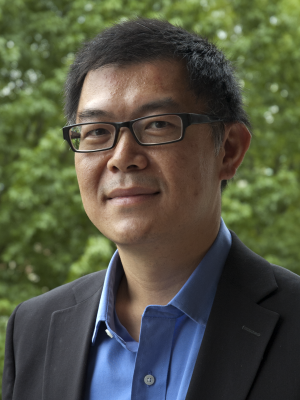
Edmund Y. W. Seto, PhD, MS
About
Dr. Edmund Seto is Professor in the UW Department of Environmental & Occupational Health Sciences. He received his PhD in Environmental Health Sciences from the University of California, Berkeley. His research focuses on the quantification of exposures and risk as they relate to environmental and occupational health. Using Geographic Information System (GIS) spatial methods, mathematical models, and novel information technologies, Dr. Seto has conducted exposure assessments for built environment studies of air pollution and noise exposures, as well as assessments of exposures to infectious agents in global health contexts.
A computer scientist by training, Dr. Seto and his lab group explore new technologies such as the use of mobile devices and low-cost sensor systems to infer the relationship between individual and population behaviors and how they relate to exposures to environmental and workplace hazards. Dr. Seto's rapid prototyping lab fosters interdisciplinary collaboration to create new technologies to improve public health.
Before coming to the University of Washington, he was Associate Professor of Environmental Health Sciences at UC Berkeley. He co-directed the UC Berkeley Health Impact Group to advance the field of Health Impact Assessment. He also served as Associate Faculty Director for the UC Center for Information Technology in the Interest of Society (CITRIS).
Dr. Seto currently serves as Director of the UW Center for Environmental Health Equity, a US EPA- and DOE-funded Environmental Justice Thriving Communities Technical Assistance Center (TCTAC) for EPA Region 10 states (AK, ID, OR and WA).
Bio, group photos, teaching material and publications available on research website.
Learn more about the UW Center for Environmental Health Equity (CEHE).
Education
- PhD, University of California (Berkeley)
- MS, University of California (Berkeley)
- AB, University of California (Berkeley)
Affiliations
UW Center for Environmental Health EquityUW EDGE Center
Mentorship
Not available to mentor new students in autumn 2027. Please follow the instructions on the How To Apply page.
Contact Jeff Shirai (jshirai@uw.edu) for student opportunities with the Center for Environmental Health Equity. The center matches students' skills and interests with Environmental Justice and Energy Justice Technical Assistance requests from tribal and community-based organizations in our region.
DEOHS Students Mentored
PHIREWISE: Public Health Impact and Response on Wildfire Exposure and Health Support and Evaluation
Lilian Liu | PhD | 2026 | View
Using Sensors to Investigate the Effectiveness of Portable Air Filtration for Reducing Particle Exposures: Implications for Community Congregate Settings
Shirley Huang | PhD | 2024 | View
The Effects of Extreme Weather Exposure on People Experiencing Homelessness in Seattle
Anisha Azad | MS Thesis | 2023 | View
Wintertime and Wildfire Smoke pm2.5: Community-Engaged Research and Use of Low-Cost Sensors to Characterize PM2.5 and Mitigate Exposures
Orly Stampfer | PhD | 2023 | View
The Effect of Exposures to Aircraft Ultrafine Particles on Acute Cardiorespiratory Health, and Control Using Personal Protective Equipment
Mariah Dittmore | MS Thesis | 2022 | View
Research
Growler Jet Noise (Population Health Initiative)
Unlocking the Nationwide Potential of Water Reuse - Task A: National Priorities: Water Innovation, Science, and Engagement to Advance Water Reuse (Water Research Foundation/US EPA)
Use of wearable sensors to improve the early diagnosis of Dementia with Lewy Bodies (DLB) (NIH)
Washington State Wildfire Smoke Rule to Protect Outdoor Workers (Harry Bridges Labor Center)
Evaluation of Air Cleaners in King County Homeless Shelters (Public Health Seattle King County)
Assistance to WA DOH on the WA Environmental Health Disparities (WA EHD) Map for the Washington State Healthy Environment for All (HEAL) Act (WA State)
Salton Sea Childrens Asthma Study (NIH)
Portable UW Particle (PUWP) Monitor for the Washington State Twin Registry Study (NIH)
Mobile Observations of Ultrafine Particles (MOV-UP) Study (WA State)
San Ysidro: Border Air Quality Study (OEHHA CalEPA; Border 2020; CARB; CalTrans)
Publications
Selected publications
- Estimates of Population Highly Annoyed from Transportation Noise in the United States: An Unfair Share of the Burden by Race and Ethnicity
- The National Transportation Noise Exposure Map
- Assessing the effectiveness of portable HEPA air cleaners for reducing particulate matter exposure in King County, Washington homeless shelters during the COVID-19 pandemic: implications for community congregate settings
- Impacts of using auto-mode portable air cleaner on indoor PM2.5 levels: An intervention study.
- Field measurements of PM2.5 infiltration factor and portable air cleaner effectiveness during wildfire episodes in US residences.
Engagement
Equity, diversity and inclusion
I am committed to work towards improving equity, diversity, and inclusion in my research, teaching, and service activities. As a person of color, I have experienced racism. As a person of power and privilege, my efforts align with those in the university, those that fund my work, and those that I collaborate with to promote justice, equity, diversity, and inclusion. As a scientist, my positionality leans strongly towards evidence and truth, and away from bias and ignorance. My teaching and mentoring aim to provide students with skills to assess disproportionate exposures, cumulative health impacts, and environmental health disparities. My work is often based on the principles of community-engaged research, which benefits from community and government agency partnerships and collective experience and knowledge. I mentor students and postdocs, who share my passion for justice and identifying interventions to environmental health problems. This is reflected in much of the work we do:
- Co-Production of the Washington Environmental Health Disparities Map
- Collaborating with Imperial Valley and San Ysidro border community organizations to establish community-operated air quality sensor networks
- Collaborating with Public Health agencies to evaluate HEPA air cleaners in King County homeless shelters
- Assessing the disproportionate impact of COVID-19 on BIPOC communities
- Inviting leaders in environmental and occupational health to discuss their environmental justice work with our students, faculty and staff
- Participating in international collaborations and scientific exchanges
- Promoting diversity in publication authorship
- Acknowledging my membership in public institution, and providing service whenever possible to the community and other public agencies
Community and research partnerships
Recent collaborative public health projects and research partnerships include work with:
- Public Health Seattle King County
- Washington State Department of Public Health
- Sound Defence Alliance
- Citizens of Ebey’s Reserve
- Quiet Skies over San Juan County
- Duwamish River Community Coalition
- Front & Centered
- Casa Familiar
- El Centro de la Raza
- Comite Civico del Valle
- Washington State Twin Registry
- Beacon Hill Noise Project
- Tribal Healthy Homes Network
Teaching practices
I teach ENVH 465/565: Geographic Information Systems (GIS) in Public Health (Autumn) and ENVH 580: Departmental Seminar (Spring).
The GIS course engages students through case studies and breakout exercises that encourage students to leverage their backgrounds, experiences, and understanding of public health concepts to design map visualizations and spatial analytic tools to address real-world public health issues. The GIS course includes a computer lab and GIS exercises that build practical geospatial analysis skills related to assessment of environmental exposures, health disparities, cumulative impacts, siting of health services, upstream social and built environmental determinants of health.
The department seminar invites experts from within the field of environmental and occupational health to share their research, community work, and perspectives with faculty, staff, and students. I faciltate discussion with our guest speakers to explore the implications of their work on future research needs, policy, and environmental justice. In recent years, we have invited leaders to speak on their work addressing environmental and other forms of structural racism.
Service
- DEOHS PhD Exam Committee (Chair 2022, 2023; Member 2024)
- DEOHS Diversity, Equity, and Inclusion Committee, 2022
- DEOHS Peer-teaching Review Committee, 2022, 2023
- DEOHS Admissions Commitee, 2024
- Previous conference technical planning committees
- Previous Faculty and Dean Seach Committees
- Previous Faculty Promotion Reviews
- Previous proposal and science reviews for USEPA, WA DOH, NIH, CDC, NSF, and HEI
- Technical Advisory Panel, Tribal Healthy Homes Network, 2024-2025
- UW Nature + Health Steering Committee, 2024-2025
- Univ of Utah, SMARTER Project Advisory Panel, 2024-2025