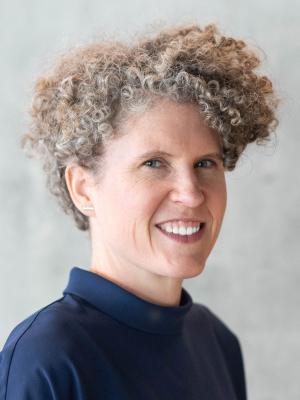
Joan Casey, PhD
About
Joan A. Casey received her doctoral degree from the Department of Environmental Health Sciences at Johns Hopkins Bloomberg School of Public Health in 2014. Dr. Casey is an environmental epidemiologist who focuses on environmental health, environmental justice, and sustainability. Her research uses large secondary health datasets, such as electronic health records, to study the relationship between emerging environmental exposures and population health across the lifecourse. She also considers vulnerable populations, joint social and environmental exposures, and health disparities, particularly in an era of climate change. Dr. Casey investigates a range of exposures including wildfires, power outages, ambient temperature, the built environment, fossil fuel infrastructure, and concentrated animal feeding operations.
From 2014-2016, Dr. Casey was a Robert Wood Johnson Health and Society Scholar, and from 2019-2022, she was the co-chair of the International Society for Environmental Epidemiology North American chapter. She also serves as an editorial board review member for Environmental Health Perspectives. Dr. Casey also holds a BS in Biological and Environmental Engineering from Cornell University and an MA in Applied Physiology from Teachers College at Columbia University.
Education
- PhD, Johns Hopkins Bloomberg School of Public Health
- MA, Columbia University Teachers College
- BS, Cornell University
Affiliations
Mentorship
Not available to mentor new students in autumn 2027. Please follow the instructions on the How To Apply page.
Research
Interests: Climate-related exposures including wildfires, ambient temperature, and power outages; exposures across the lifecourse; social and environmental determinants of health; environmental justice; the energy transition; policy change
Projects
Wildfires and Alzheimer’s disease and related dementias (ADRD). Wildfires have grown in size, severity, and frequency in the US. They produce large quantities of fine particulate matter as well as stressful disaster exposures in communities. These environmental and social stressors may increase the risk of ADRD incidence, progression, or mortality. Here, we conduct a nationwide analysis using Medicare hospitalizations data and a California analysis using Kaiser Permanente electronic health record data to determine links between wildfire exposures and ADRD. Importantly, we also consider the modifying role of nursing home residence, socioeconomic status (SES), power outages, and evacuation.
Early-life social and environmental exposures and late-life cognitive function and dementia. The incidence of Alzheimer’s disease and related dementias (ADRD) is 50%+ higher among Black compared to white Americans. Environmental and social drivers, such as air pollution and racial segregation likely explain the difference. This study seeks to link Health and Retirement Study participants to their 1940 place of residence (near the time of birth), assign measures of air quality and systemic racism, and assess associations with late-life cognitive decline and dementia.
Power outages and health. As the US power grid ages, climate change accelerates, and the energy transition drives electricity demand, the prevalence and severity of power outages will likely increase. In nationwide and New York studies, we evaluate weather and climate causes of outages, environmental justice concerns, and health effects.
Unconventional natural gas development and childhood respiratory health. Unconventional natural gas development (i.e., fracking) can produce a range of environmental exposures, such as air, noise, and water pollution as well as psychosocial stress among nearby populations. We consider environmental justice dimensions of this exposure, finding that oil and gas wastewater in Pennsylvania was disproportionately disposed in socioeconomically deprived communities. Ongoing work assesses the role of unconventional natural gas development and coal-fired power plant exposures for childhood respiratory health.
Racial disparities in preterm birth and fetal loss. Non-Hispanic Black mothers have 1.6x the risk of delivering preterm compared to their non-Hispanic white counterparts. Along with Tim Bruckner’s group at University of California, Irvine, we evaluate which spatial indicators of structural racism may explain this disparity.
Multigenerational air pollution exposure and birth outcomes. Air pollution exposure follows a social gradient with lower SES and non-white individuals generally exposed to more pollution. In this work, we seek to understand whether multigenerational exposure to different levels of air pollution may partially explain birth outcome disparities. The study leverages 700,000+ births in California and uses causal inference methods to evaluate the change in racial/ethnic and socioeconomic birth outcome disparities under the scenario where disadvantaged groups receive an exposure distribution of more privileged groups.
Publications
Selected publications
- Wildfire Exposure and Health Care Use Among People Who Use Durable Medical Equipment in Southern California
- Spatiotemporal distribution of power outages with climate events and social vulnerability in the USA
- Redlines and Greenspace: The Relationship between Historical Redlining and 2010 Greenspace across the United States
- The 2021 Texas Power Crisis: distribution, duration, and disparities
- Hyperlocalized Measures of Air Pollution and Preeclampsia in Oakland, California
Engagement
Equity, diversity and inclusion
Goodman et al. 2020 Public Health Reports used 2016–2017 data from the Association of Schools and Programs of Public Health institutions. They reported 11% of students and 6% of faculty were Black, 13% of students and 6% of faculty were Hispanic, and just 0.4% of students and faculty were Native American. In addition to the low representation of these historically marginalized groups, public health higher education also lacks individuals from other diverse backgrounds, including those from low socioeconomic status families, first-generation students and faculty, those with disabilities, and LGBTQ+ individuals. I am committed to helping to solve this problem. In addition, to reduce health disparities and effectively tackle public health threats from complex, socially-patterned exposures (e.g., COVID-19, climate change), our field must make the structural changes necessary to diversify our student, faculty, and staff populations and expand our research partners to include communities and other affected groups.
My research studies environmental disparities and how they impact health inequities in a changing climate. I am particularly interested in mentoring and teaching students from persistently marginalized backgrounds and helping them succeed in academia and elsewhere. I am also committed to recruiting and supporting faculty and staff from groups historically underrepresented in academia. In terms of positionality, I am white, of Western European decent, use she/her/hers pronouns, grew up in rural and suburban Oregon, and have a spouse, toddler, and dog (hi, Leela!).
Community and research partnerships
Kaiser Permanente Southern California (Pasadena, CA)
Sutter Health (Walnut Creek, CA)
California Department of Public Health (Richmond, CA)
PSE Healthy Energy (Oakland, CA)
CrisisReady (https://www.crisisready.io/)
Service
Member, Equity, Diversity, and Inclusion Committee, DEOHS (2023 – Present)
Member, PhD Exam Committee, DEOHS (2023 – Present) Member
Center for One Health Research (2023 – Present)
Participating faculty, P30 NIEHS Center Interdisciplinary for Exposures, Diseases, Genomics and Environment (EDGE) (2023 – Present)
Participating faculty, T32 Biostatistics, Epidemiologic and Bioinformatic Training in Environmental Health (BEBTEH) Training Grant (2023 – Present)