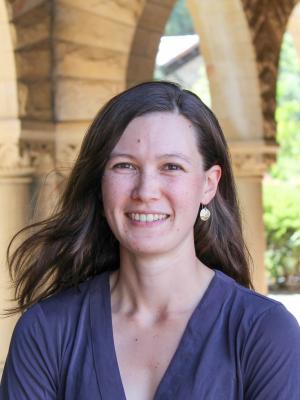
Marissa Childs, PhD
About
Marissa Childs's research explores how large-scale environmental changes — like climate change and land use change — affect human health. Her work uses remote sensing and modeling to quantify nonlinear and context-dependent effects of environmental change. In particular, some of her past and ongoing work has focused on predicting yellow fever virus spillover in Brazil, projecting changes in dengue incidence from climate warming, producing granular estimates of wildfire smoke exposure throughout the contiguous US, and understanding climate-sensitive diseases in Madagascar.
Education
- BA, Mathematics and Economic-Environmental Studies, Whitman College
- PhD, Environment and Resources, Stanford University
Mentorship
Available to mentor new Master's and Doctoral students in autumn 2027. Please follow the instructions on the How To Apply page.
Research
Interests: Environmental health, climate change, air pollution, wildfire smoke, infectious diseases, climate change adaptation
Publications
Selected publications
- The contribution of wildfire to PM2.5 trends in the USA
- Daily Local-Level Estimates of Ambient Wildfire Smoke PM2.5 for the Contiguous US
- The influence of vector‐borne disease on human history: socio‐ecological mechanisms
- Susceptible host availability modulates climate effects on dengue dynamics
- Mosquito and primate ecology predict human risk of yellow fever virus spillover in Brazil