Scientists and policymakers use climate scenarios to envision how today’s choices affect tomorrow’s world. But for complex subjects like public health, these intentionally simple scenarios fall short.
About a decade ago, a group of climate scientists described five scenarios for the future. Called the Shared Socioeconomic Pathways (SSPs), these scenarios suggest how socioeconomic development could evolve in worlds with differing challenges to climate adaptation and mitigation.
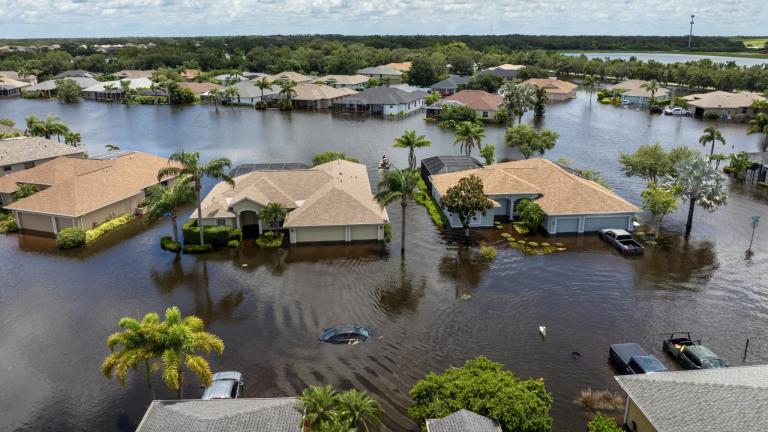
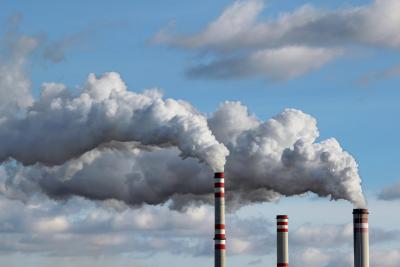
Scientists and policymakers use SSPs to project how today’s choices affect tomorrow’s world. But for complex subjects like public health, these intentionally simple scenarios don’t capture every complexity. Under the SSP “Fossil-Fueled Development,” for example, the world doubles down on fossil fuels, spurring rapid economic growth. That growth, according to the scenario, would spur investments in education and health. But at the same time, increased emissions would degrade the environment, exacerbating health risks.
That description leaves many public health questions unanswered: Would hospital systems be better prepared to handle the increased volume? Could more frequent heat waves lead people to spend more time inside, amplifying mental health burdens?
Last year, a group of 63 experts in climate change and health met in Vienna to extend the SSPs to better reflect the dynamic nature of public health over the course of the century. Their expanded narratives, published Oct. 5 in The Lancet Planetary Health, provide comprehensive visions of possible population health and health system development and explore how communities might better prepare for shifting future health risks.
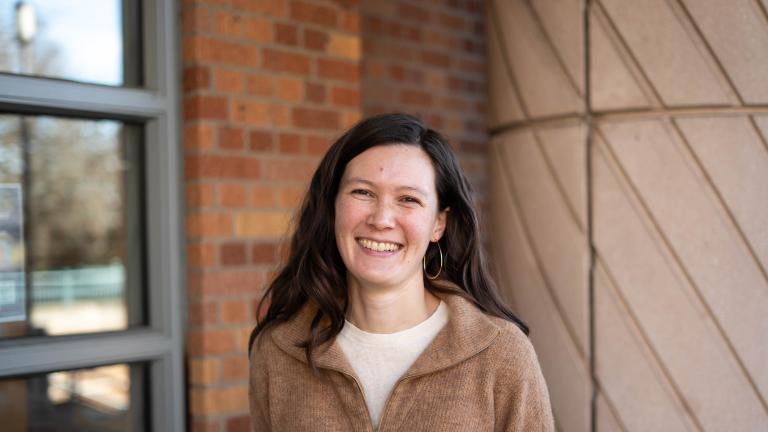
Carole Green, a UW doctoral student in environmental and occupational health sciences, attended the workshop and is lead author of the accompanying paper. UW News sat down with Green to talk about where previous climate scenarios fell short, the conference’s work and how we can better prepare to keep each other safe in an uncertain future.
What are the Shared Socioeconomic Pathways, and how do we use them?
Carole Green: Shared Socioeconomic Pathways are a narrative framework that can be used in conjunction with pathways of greenhouse gas emissions to project future climate impacts to 2100. The SSPs are basically descriptions of the societal choices that affect the magnitude and pattern of interventions to protect human health and well-being.
The SSPs are essentially five possible alternatives for our future world. These pathways have been expanded to incorporate a wide range of issues of relevance for public health, and have been downscaled to describe what the future might look like in different countries and regions.
SSPs are featured in global processes like United Nations climate conferences, where negotiators come from around the world to debate and agree on approaches to build resilience and sustainability to climate changes. The models help us understand how those choices interact and what the effects might be.
We also use the SSPs in health research to understand the possible magnitude and geographic pattern of health impacts from climate change over the course of this century. Many projects at UW use future warming levels to analyze things like future wildfire impacts on Washington residents (research done by UW’s Climate Impacts Group).
Once you added complexity into the SSPs, what changed in your understanding of possible futures? Did you learn anything new or surprising?
CG: We learned that the drivers of health impacts are complex, and many are neither entirely good nor bad. Prioritizing sustainability, mitigation and adaptation will not necessarily lead to the best world for each future health outcome, but it definitely affects the future of health and well-being. Health futures we face globally are not predetermined. Different pathways could lead to vastly different health outcomes, with governance, health-system capacity, resources, equity, and cross-sectoral factors such as water and energy playing critical roles.
For example, under one of the scenarios, people don’t prioritize reducing greenhouse emissions, focusing instead on adapting to the changing climate. Strong investment in technology leads to quite a lot of wealth, which can benefit some health outcomes. But it’s not ideal, because people would also have to spend more time indoors because of the growing heat burden and would have to reduce connection to the outdoors and nature. You really don’t want to live in that scenario.
It’s very much a mix, which is challenging.
Last question: This group — including dozens of the world’s leading experts on climate and health — chose you to write the paper. How did that happen?
CG: I am definitely not the leading expert in that room, so it was very much an honor to work on this and lead the writing. A lot of it comes from my adviser, Kristie Ebi, who is very supportive of me and my work. That’s been really meaningful. She encouraged me to take this on.
I often tell people that my job is to listen to experts and write down what they say. It was very meaningful to get to make those connections.
Adapted from the full post at UW News.