Last month, a group of 175 researchers, including eight from the University of Washington, co-authored a commentary published in Earth’s Future and the Bulletin of the American Meteorological Society.
The paper provides a roadmap for future climate assessments in the U.S. by synthesizing the science and identifying research priorities based on existing gaps. “U.S. Climate Collection: Informing Assessment of Risks and Solutions” is the first article to appear in a special collection launched by the American Geophysical Union and the American Meteorological Society.
Many of the scientists who co-authored this commentary were invited to contribute to the sixth National Climate Assessment (NCA), slated for early 2028, but were then dismissed in April 2025 after the Trump Administration cancelled funding for the assessment. The fifth NCA was published in 2023.

The federal government is legally required to produce a National Climate Assessment chronicling climate change every four years per the Global Research Change Act of 1990. These assessments track new and evolving risks related to climate change, as well as options for mitigation and adaptation. The national scope is key to ensuring that funding and policies represent a broad range of experiences and concerns.
“International assessments are valuable, but they are not always tailored to the specific regions and issues that are important in the United States. National assessments fill that gap,” said Guillaume Mauger, Washington state climatologist and a research scientist in the UW Climate Impacts Group.
The special collection is not intended to replace the NCA but rather compile research for other scientists, policymakers and members of the public to aid in decision making. The commentary kicks off the collection by identifying where research has advanced, and how risks have changed, in the years since the last assessment.
“Our understanding of climate change and its impacts continues to evolve,” said Dr. Jeremy Hess, professor of global health, of environmental and occupational health sciences, and of emergency medicine in the UW School of Medicine. “Conducting regular climate assessments allows us to systematically evaluate that new evidence, incorporate it into our understanding of current circumstances, present it to stakeholders, and apply it to near-term decisions in our respective sectors.”
UW News asked each of the UW contributors to elaborate on their role in authoring the commentary and how it connects to their research.

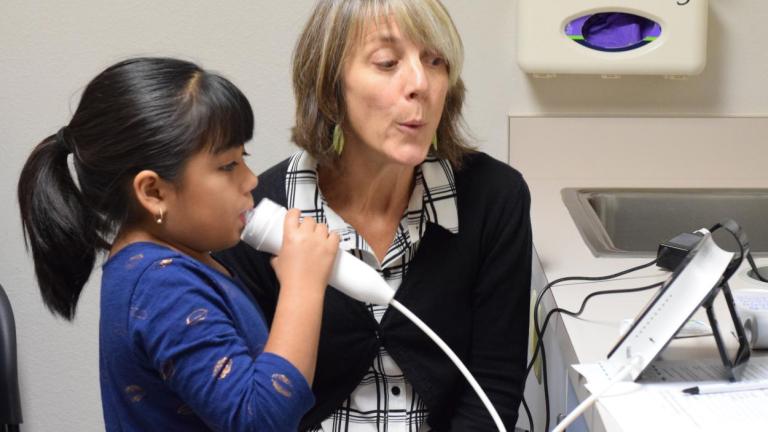
Dr. Jeremy Hess, UW professor of environmental and occupational health sciences, of global health and of emergency medicine in the UW School of Medicine: “The takeaways from the health section, which I helped draft, are that we need more information on health impacts from extreme weather and compound events, as well as information on the costs of these impacts. We also need more strategies for advancing adaptation in public health and health care systems; we need health care interventions to protect patients at particular risk; we need more information on nature-based solutions; and we need more information to help convey the health benefits of a clean energy transition.
“The recommendations related to interventions and adaptation in the health sector are particularly relevant to my work at the UW, which is focused on climate change health impacts and opportunities for increasing resilience of the public health and health care systems. I research these issues and also provide leadership related to sustainability and climate resilience for UW Medicine.”
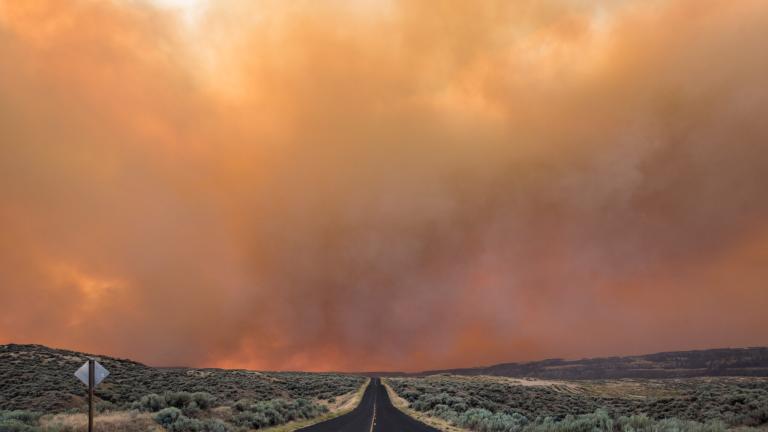
Kristie Ebi, professor of global health and of environmental and occupational health sciences: “I was an author on the Air Quality chapter that focused on how climate change could alter exposures to poor quality, from pollen to wildfire smoke to indoor and outdoor air quality. One of my areas of research at UW is quantifying the extent to which reducing greenhouse gas emissions could reduce morbidity and mortality from outdoor air pollution. The evidence is robust that the economic value of the health benefits from reducing greenhouse gas emissions would be of the same order of magnitude — if not larger — than the costs of reducing emissions. In other words, reducing greenhouse gas emissions would benefit Americans by decreasing hospitalizations and deaths.”
Excerpted from the complete post at UW News.