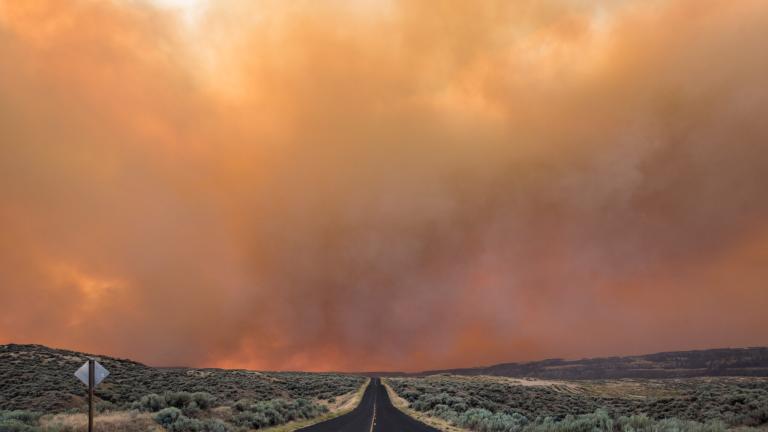
When wildfires blazed through Spokane this August, about 65,000 people in the surrounding community evacuated due to the threat of fire and smoke.
But at Airway Heights Corrections Center (AHCC), about 6 miles from the burn area of the Old Trails Fire, many of the 500 workers and the 1,800 incarcerated residents stayed put.
“Both incarcerated people and correctional staff are disproportionately affected by climate-related exposures, like heat and smoke,” said Rachel Sklar, assistant professor in the UW Department of Environmental & Occupational Health Sciences (DEOHS). Because evacuating correctional facilities is logistically complex, protecting people in place during events like wildfire smoke is especially important.
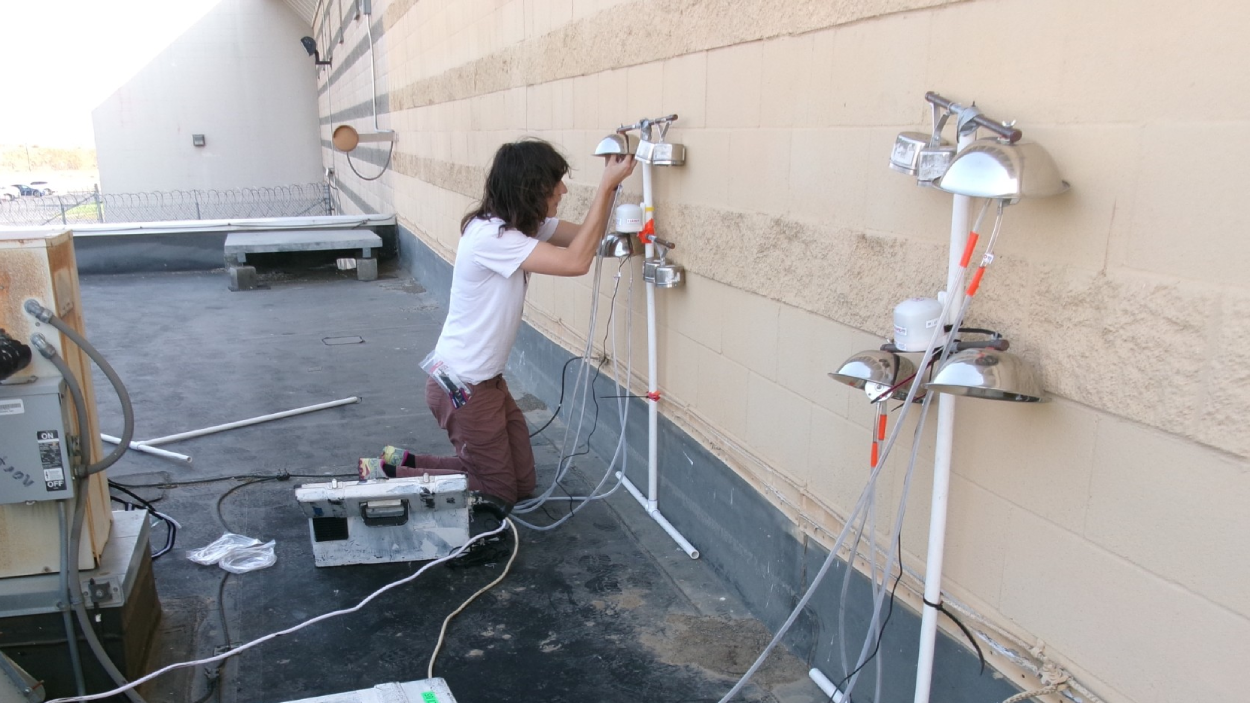
To understand their exposures, Sklar, PhD student Beck Kiely, and MS student Esmma Almousa expanded an existing air monitoring network at the facility to sample indoor and outdoor air. They started in early August and are continuing through the end of September.
“These measurements also provide an indicator of ambient conditions in the community since it’s so close to the burn area,” Sklar said. “Most of the people who work there live in the surrounding community, many were evacuated, and some may have lost their homes.”
Responding rapidly to disaster
Sklar is collaborating on the project with the Washington State Department of Corrections, who is supporting the work as part of a broader climate and natural hazard resiliency project for the agency. Thanks to that partnership, the team had established a network of inexpensive, consumer-available PurpleAir monitors at the facility before the fires started.
These monitors showed spikes in fine particulate matter (PM2.5) of over 200 micrograms per cubic meter on August 3 and 4, soon after the fire started — corresponding to a very unhealthy air quality index.
The air quality index outdoors remained elevated, at unhealthy to very unhealthy, at least through August 13. The fire was fully contained on August 19.
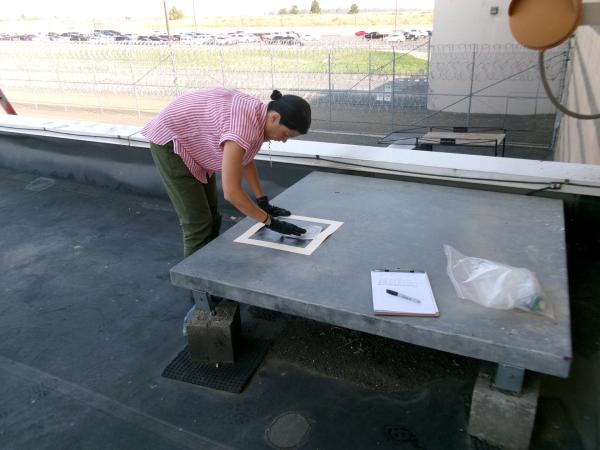
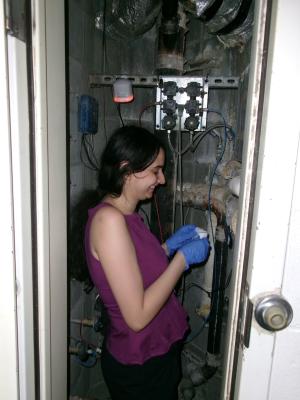
After the Spokane-area fires started, the team set up additional equipment to capture indoor and outdoor concentrations of particulate matter, metals, polycyclic aromatic hydrocarbons and other toxic contaminants. They took wipe samples from indoor and outdoor surfaces and indoor vents to examine the deposition of metals and other contaminants.
Identifying solutions
The team expects to have data soon from inside the facility, and they plan to examine how fast smoke infiltrated into different types of buildings on the campus. The findings will help identify practical interventions to better protect incarcerated people and staff during future wildfire smoke events, including where infrastructure upgrades such as improved HVAC and air filtration could be prioritized.
Their work to expand their sampling network was supported by the UW RAPID Facility, which helps researchers immediately respond to disasters.
“Our established partnership and existing monitoring network allowed rapid collection of this perishable data very soon after the fires started,” Sklar said.