When Lianne Sheppard was starting her career in public health, she decided to study biostatistics because she felt she could “learn a tool set that I could apply to anything.”
Lianne Sheppard
Professor, UW Department of Environmental & Occupational Health Sciences
Professor, UW Department of Biostatistics
Proudest achievements:
Government service, recognized for high integrity, research to improve statistical methods for application to environmental health, and research into adverse effects of air pollution and other exposures
Joined DEOHS faculty:
1993
"I have maintained a very deep commitment to promoting and preserving public health with honesty and integrity throughout my career."
- Lianne Sheppard
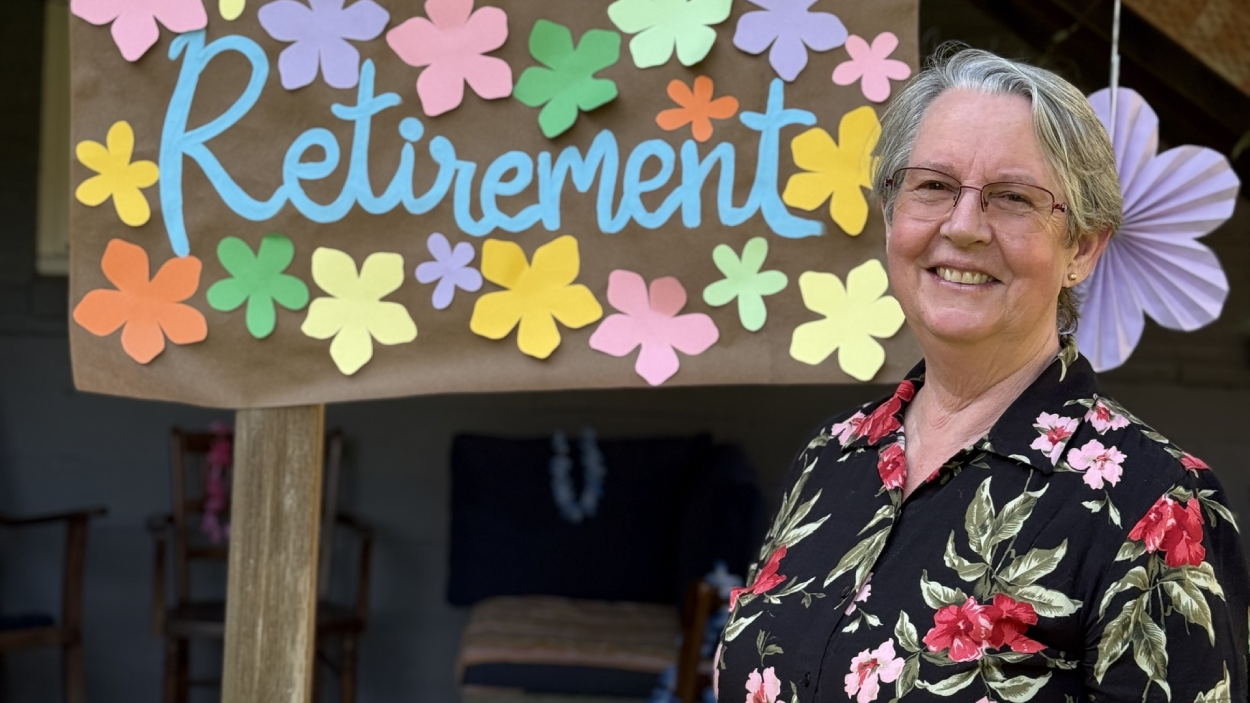
As Sheppard retires this summer after 33 years as a faculty member in the UW Department of Environmental & Occupational Health Sciences (DEOHS) and the Department of Biostatistics, that early insight has repeatedly proven true.
With her combined expertise in biostatistics and environmental health, Sheppard has tackled health threats as diverse as air pollution and pesticides, while also advising the government on science, mentoring aspiring public health professionals and recently serving as interim chair of DEOHS.
“Lianne leaves an extraordinary legacy that extends beyond her many contributions to understanding the health effects of chemical and pollutant exposures,” said Dr. June Spector, DEOHS professor and chair.
“Throughout her career, Lianne has exemplified scientific integrity, strengthened the connection between science and public policy, and devoted herself to mentoring the next generation of environmental health scientists. Her impact on our field, our department, and the many people she has mentored will be felt for years to come.”
Air pollution’s long shadow
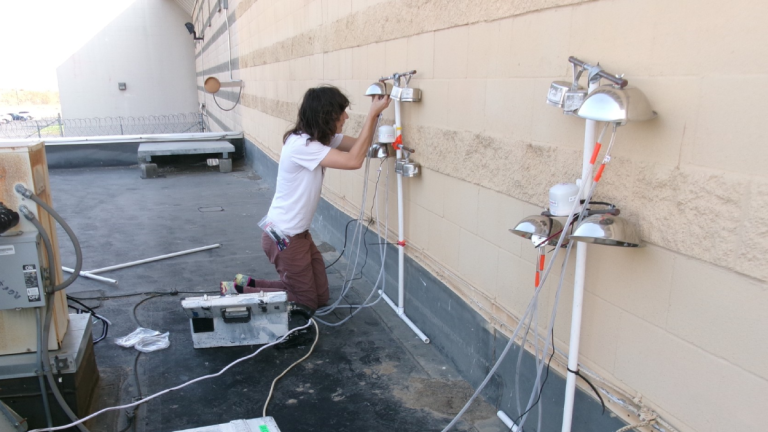
Sheppard has dedicated her career to understanding how small, widespread exposures — like air pollution and pesticides — can influence people’s health over a lifetime.
“From a public health point of view, the implications of air pollution are potentially huge, because even though the risks to individuals are small, the exposed population is so large that it means the number of adverse events is also large,” she said.
Previous instances of severe air pollution, like the “Great Smog” of 1952 in London, showed that air pollution could kill people. But it was much harder to examine how low levels of air pollution might affect people’s health over a lifetime. That’s where Sheppard’s biostatistical toolset came in.
Soon after joining the UW faculty in the 1990s, she contributed to some of the first studies showing how a person’s home address influences their long-term exposure to air pollution, and in turn their health — together with DEOHS faculty members Joel Kaufman, Tim Larson and others. She established connections between air pollution and health issues including asthma and cardiac arrest.
Later, she and then-PhD students Rachel Shaffer and Magali Blanco published one of the first studies to show a link between air pollution and dementia, relying on a long-term study of Puget Sound residents.
A health threat in the food supply
In 2016, Sheppard was asked to join a U.S. Environmental Protection Agency scientific advisory panel to review the health impacts of glyphosate, the world’s most widely used pesticide.
Here was yet another chemical that most Americans were exposed to at low levels, this time through the food supply. But there was ongoing debate over whether it caused cancer and other adverse health effects.
She and colleagues, including Shaffer, gained insights into its toxicity by evaluating the outcomes across published studies, including agricultural workers who are highly exposed to the chemical. They found that exposure to glyphosate increased the risk of non-Hodgkin lymphoma by 41%.
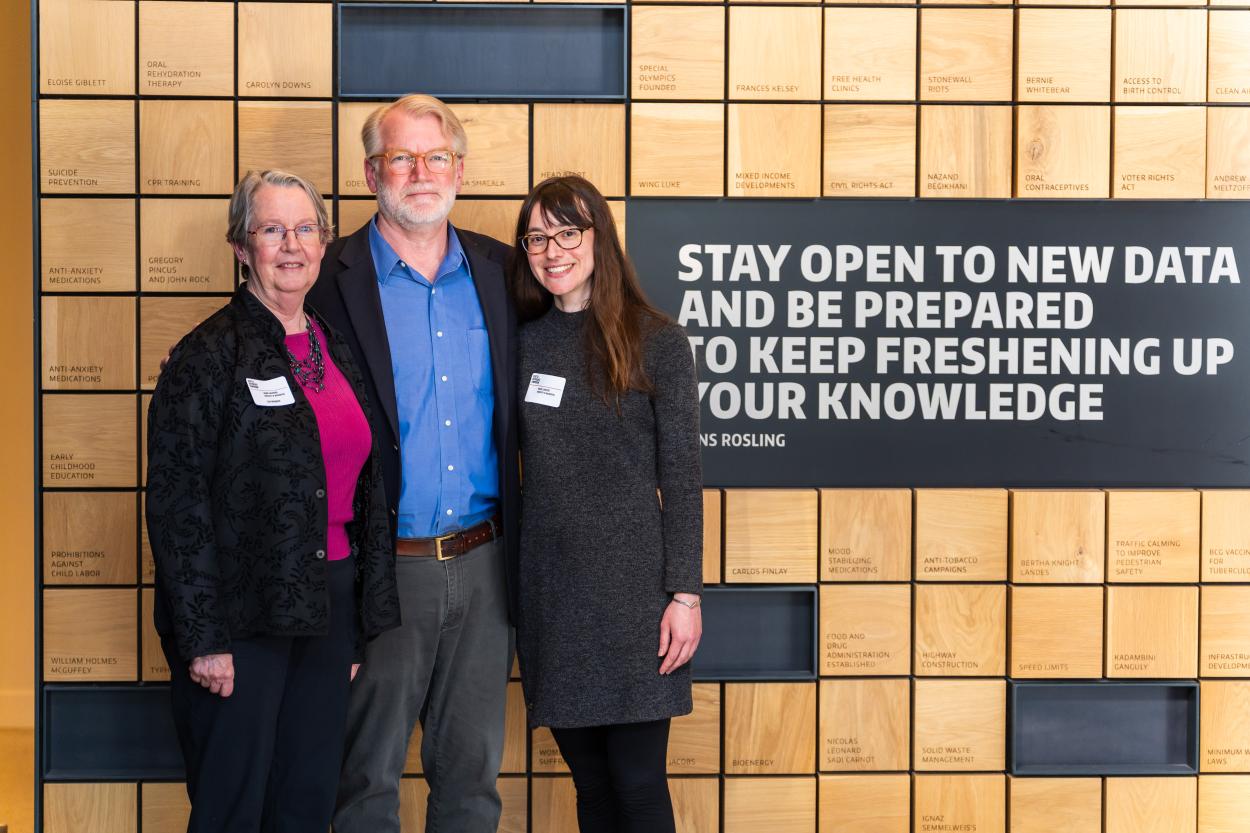
Sheppard recently convened the Seattle Glyphosate Symposium, where hundreds of researchers and advocates discussed the pesticide’s health effects and developed an expert statement concluding that glyphosate can cause cancer, in addition to other health concerns.
Guiding the next generation
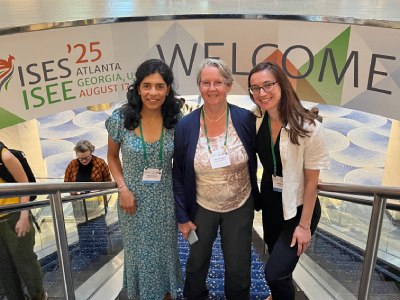
As a professor and mentor, Sheppard has encouraged her students to take the lead on high-profile studies and helped them plan their research by teaching the department’s thesis proposal class.
In 2019, she won the department’s Outstanding Faculty Mentor Award, with nominations from Shaffer, Blanco and others.
“From Lianne, I have learned that research should always be ethical, reproducible and guided by science every step of the way,” Blanco, now an assistant professor in DEOHS, said at the time.
She also started a popular mentorship program in environmental health research for UW undergraduates, including those from backgrounds underrepresented in the biomedical sciences, called Supporting Undergraduate Research Experiences in Environmental Health (SURE-EH).
“Students work in faculty labs for up to 2 years, and they get this long-term experience that is really unique,” Sheppard said. “We’ve had some really big success stories in that program.”
An unflinching advocate
Throughout her career, Sheppard has been a fierce and unwavering advocate for both public health and scientific integrity. She has served as the chair of EPA’s Clean Air Scientific Advisory Committee and joined a lawsuit organized by the Union of Concerned Scientists to defend scientists’ rights to serve on expert governmental advisory panels.
For many years, she taught a course on research integrity in the data sciences, where she helped students understand, as she put it, “where and how things go wrong and the ways data science can be manipulated.”
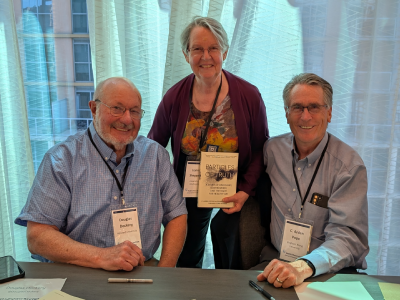
Bruce Lanphear, a professor in health sciences at Simon Fraser University, delivered a tribute to Sheppard at the Seattle Glyphosate Symposium, highlighting her groundbreaking work on the pesticide chlorpyrifos. Sheppard found that a 1972 study funded by the chemical industry on health risks of the pesticide was faulty, leading the EPA to set the chemical’s safe limit too high.
“Lianne has spent her career helping us see more clearly,” he said. “Sometimes by developing better methods. Sometimes by challenging flawed analyses. Sometimes by serving in the difficult role of scientific adviser when evidence and politics collide.”
“That kind of work rarely attracts headlines. But it shapes decisions that affect millions of lives.”
In 2020, the International Society for Environmental Epidemiology honored Sheppard with its prestigious Research Integrity Award.
“I have maintained a very deep commitment to promoting and preserving public health with honesty and integrity throughout my career,” Sheppard said. “As I kid, I remember being called a goody two-shoes, but as an adult, it’s just a core part of who I am, so I haven’t been afraid to speak up.”
In retirement, Sheppard looks forward to spending time with her family — especially her new grandson — and working in her garden and orchard. She will also continue her research as a professor emeritus, and is already busy on a paper sharing the results of the Seattle Glyphosate Symposium.